
A Mission Grounded in Urgency and Opportunity
Ms. Shoko’s Visit to Somalia
Ms. Shoko Noda
DISPLACEMENT: A CRISIS BEYOND TEMPORALITY
“They want to be out of those camps, but temporary arrangements often become semi- permanent, leaving people without a clear future.”
Ms. Shoko Noda
A SHIFTING AID LANDSCAPE
The visit also reflected broader global trends, including a decline in international aid. This shift reinforces the importance of national ownership and leadership in driving Somalia’s development agenda. Future progress will depend on governments and communities taking the lead, with international partners playing a supportive role
aligned with national systems rather than operating in parallel.
JOBS, PRIVATE SECTOR, AND ECONOMIC RECOVERY
Economic opportunity remains central to stability. Expanding access to employment particularly for youth is critical to reducing vulnerability and supporting recovery. The private sector is increasingly recognised as a key driver of growth, with investments in entrepreneurship, vocational training, and market access forming the foundation of sustainable development.
Drawing from international examples, including post-war recovery in Japan, the importance of national determination and broad economic participation was emphasised as essential for long-term progress.
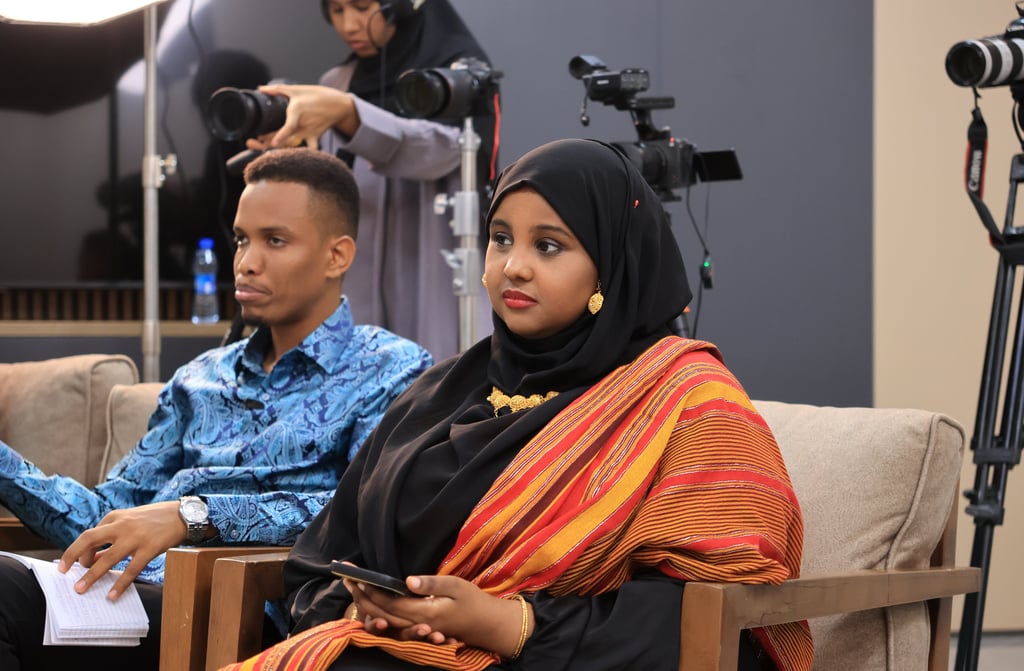
At a time when Somalia stands at a critical intersection between crisis response and long-term recovery, the visit of Ms. Shoko Noda, Assistant Secretary-General of the United Nations and Chief of the UNDP Crisis Bureau, signals more than diplomatic engagement, it reflects a strategic commitment to sustaining momentum where it
matters most.
Her mission comes as Somalia continues to navigate complex and overlapping challenges: protracted displacement, climate shocks, fragile governance systems, and economic vulnerability
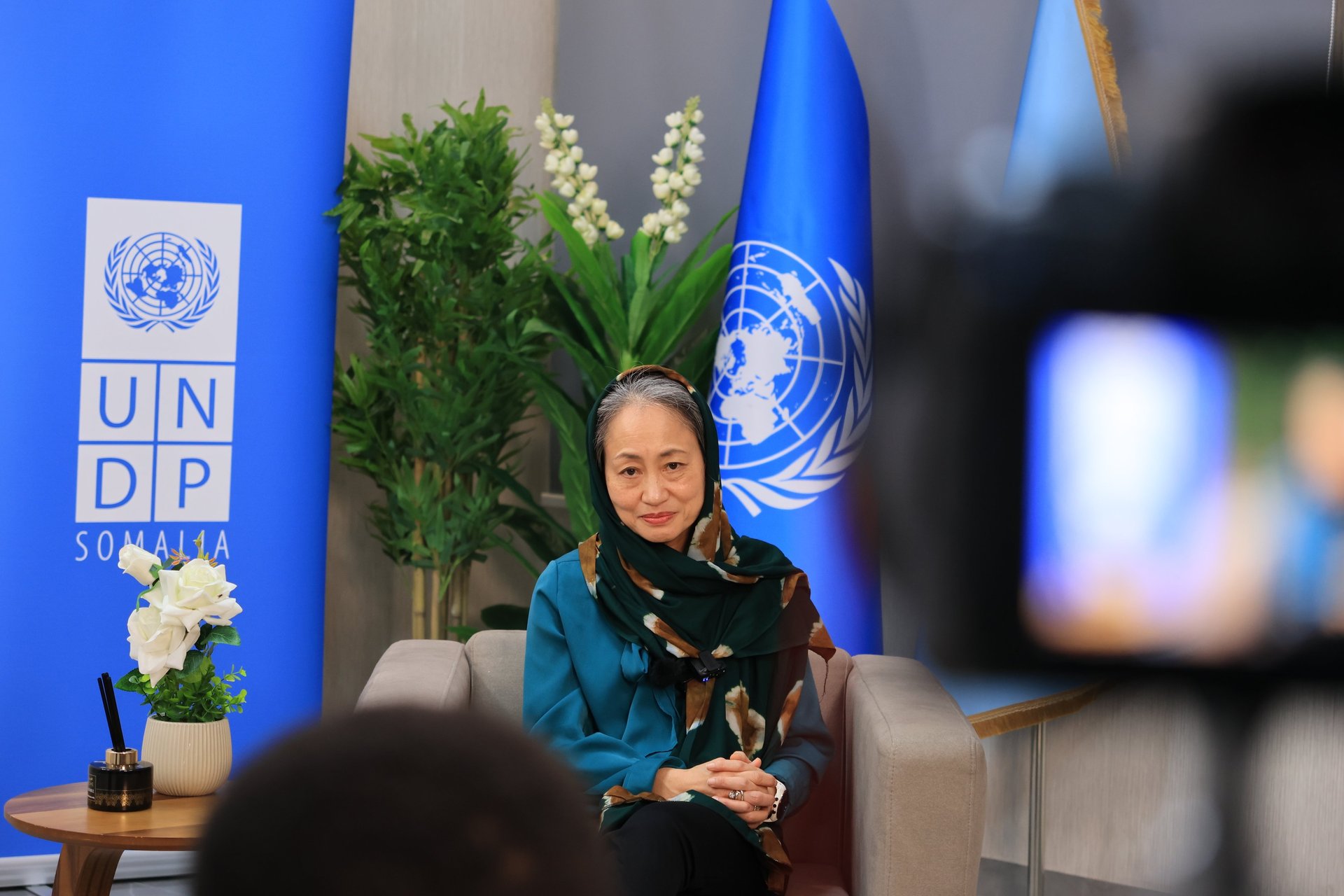
As part of the mission, a rare interview opportunity was conducted by Zahra Abdihagi on behalf of Somali Storytellers, bringing local storytelling into direct dialogue with global leadership.
YOUTH AT THE CENTER OF CHANGE
Field visits revealed encouraging signs of progress, particularly through youth-focused initiatives. At the Elman Peace Center, young people are gaining practical skills that open pathways to employment and entrepreneurship a direct response to the country’s need for economic self-reliance.
“Young people are learning practical skills to enter the job market and become financially independent.”
Ms. Shoko Noda
With youth comprising the majority of Somalia’s population, their active participation in the economy and civic life is not peripheral it is the foundation of the country’s long-term stability.
LOCAL LEADERSHIP, GLOBAL PARTNERSHIP
A key takeaway from the mission is the primacy of locally driven solutions, supported by international partnerships that strengthen not replace national systems. The interview conducted by Zahra Abdihagi reflects this principle directly, positioning Somali voices at the centre of global development conversations.
“It’s amazing to see women journalists. Somali women are strong and they are truly the backbone of the country.”
A COUNTRY MOVING FORWARD
Despite ongoing challenges, Somalia’s progress over the past decades remains evident. From policy reforms to
grassroots initiatives, the country continues to build toward a more stable and self-determined future.
“Somalia should be proud of the progress that has been made.”
Ms. Shoko Noda
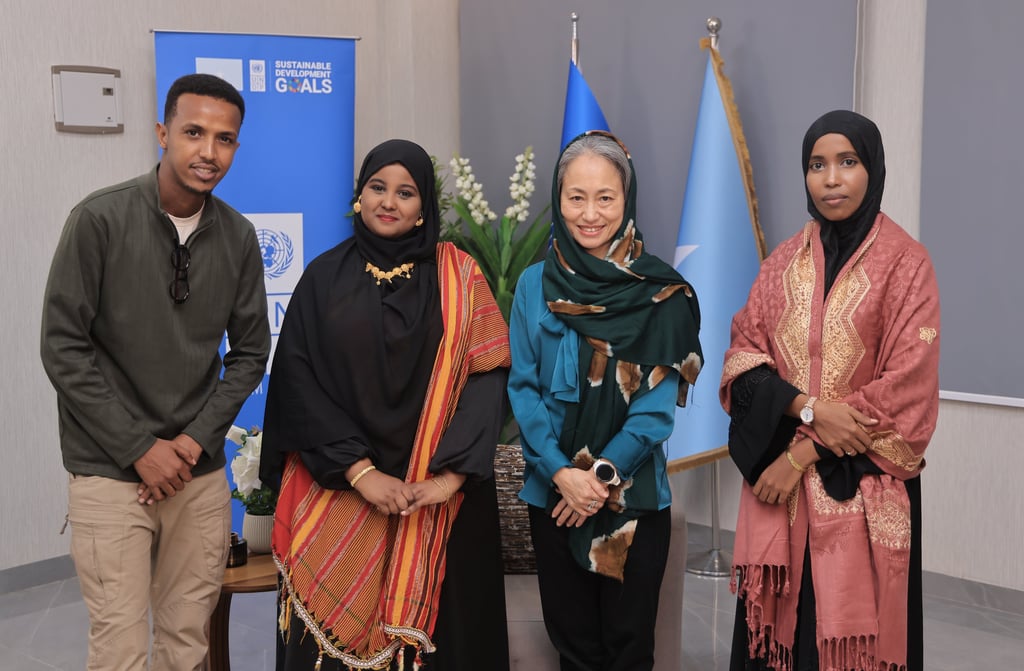
Somali Storytellers team with Ms. Shoko Noda, UN Assistant Secretary-General
UNDP Somalia, Mogadishu, May 4 2026
© 2026 Somali Storytellers. All rights reserved. Reproduction with attribution only.
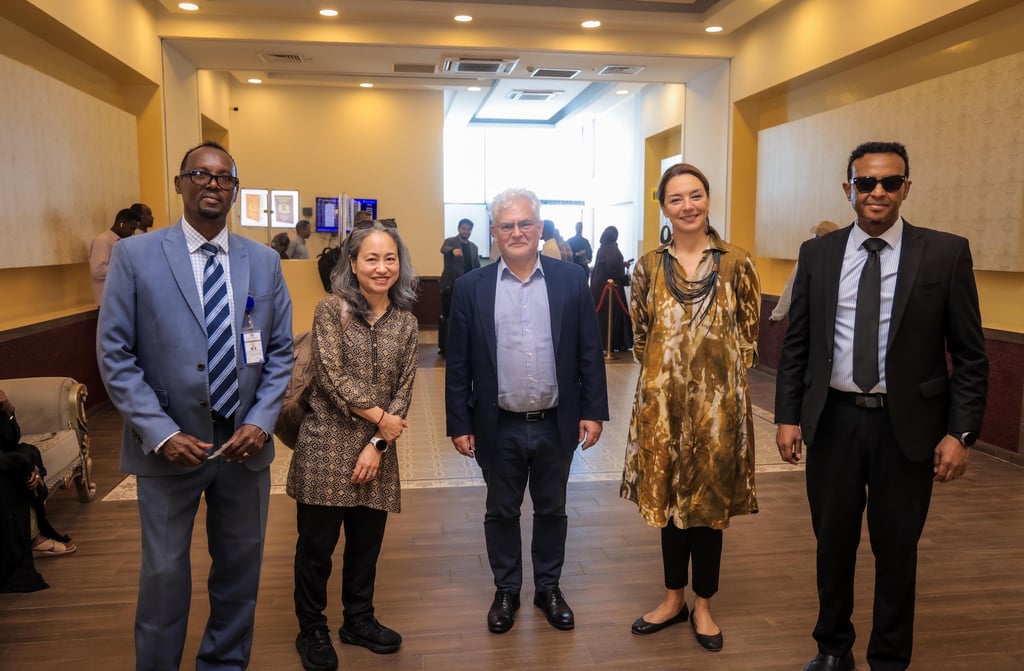
Ms. Shoko Noda arrives in Mogadishu for her week-long mission. At Aden Adde International Airport, May 3 2026.
Despite the short duration of the visit, observations aligned with a consistent global pattern, displacement is rarely temporary. Across Somalia, internally displaced populations continue to express a strong desire to leave camp settings, yet many remain in prolonged conditions with limited prospects.
This reality underscores the need to move beyond emergency response toward solutions that restore stability, dignity, and long-term opportunity.
POLICY PROGRESS AND CAPACITY GAPS
Somalia has taken notable steps in integrating displacement into national planning frameworks, signalling a shift toward long-term thinking. However, implementation remains uneven, and the gap between policy commitment and service delivery is most acute at the local level.
“The national transformation plan has included this issue of displacement and I think that’s the first step.”
Ms. Shoko Noda
Stronger institutional capacity, particularly in local governance structures, remains the most critical unmet need. Without it, national commitments cannot translate into the services that communities actually require.
Zahra Abdihagi, Executive Director of Somali Storytellers, during the exclusive interview session
Mogadishu, May 4 2026.
Ms. Shoko Noda, UN Assistant Secretary-General and UNDP Crisis Bureau Director, during the interview session at UNDP Somalia
Mogadishu, May 4 2026.