Khat and Charcoal How Addiction Fuels Environmental Degradation and Rural Poverty in Baidoa, Somalia
This research article was developed by Mohamed Ali Nur as part of a“Climate Change Reporting Fellowship” with the UNDP Somalia.


Introduction
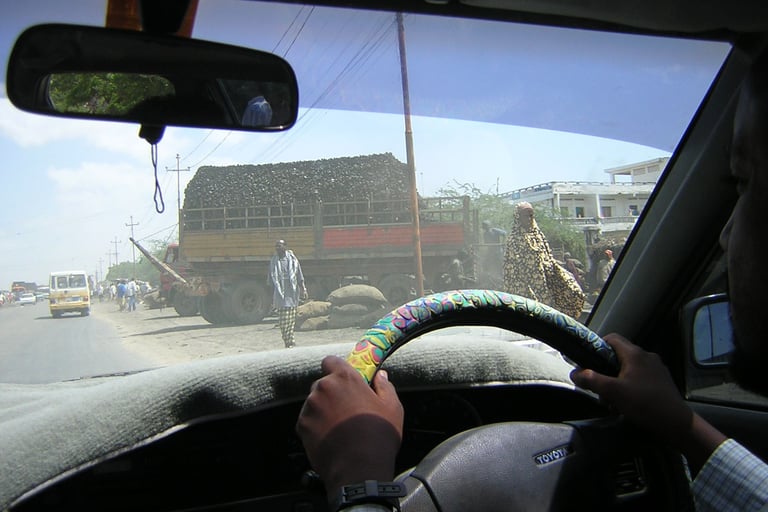
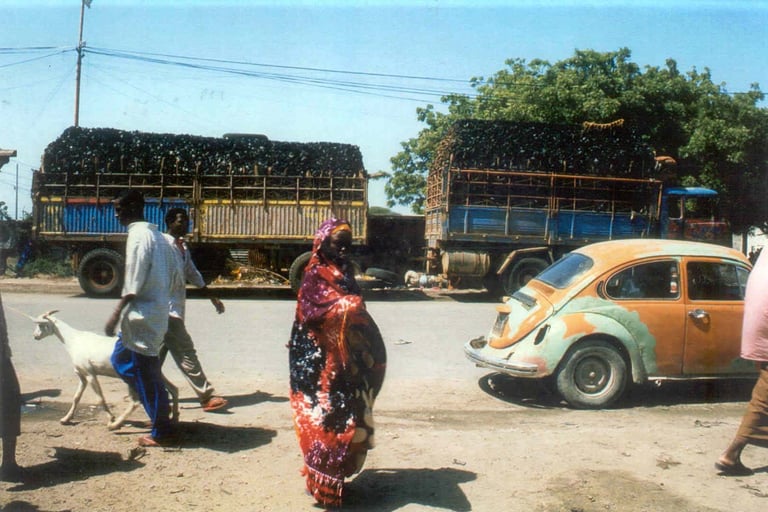
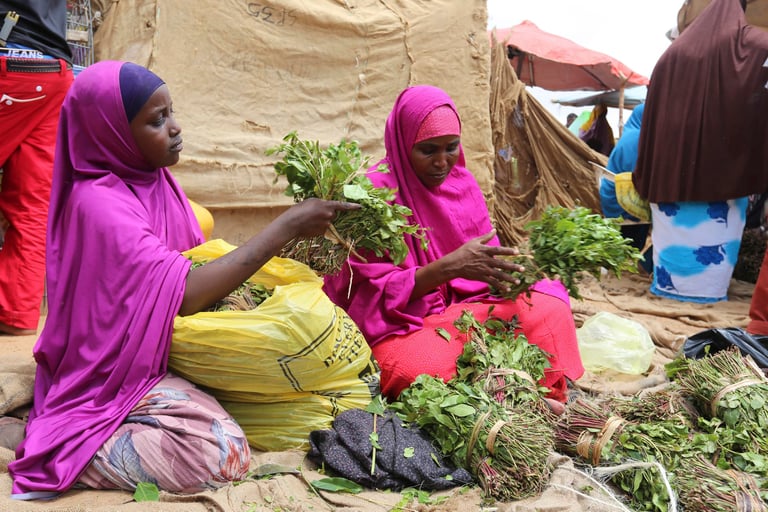
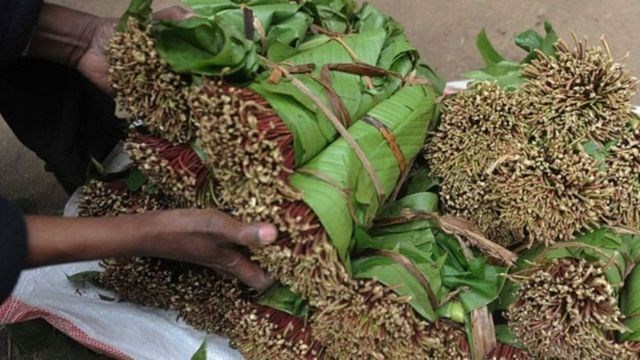
Every morning on the outskirts of Baidoa, smoke rises before the day begins. It drifts from charcoal pits cut into land once covered with trees. Young men work in silence, cutting acacia, stacking logs, and burning them slowly into charcoal. The money earned lasts a short time. Midday, it turns into khat, the green leaf chewed daily across much of rural Somalia. What started as a social habit has grown into dependence. Trees fall to produce charcoal. Charcoal pays for khat. Khat fills long hours of unemployment and boredom. The cycle repeats the next day. Elders describe it with painful honesty, cutting a tree to chew a twig. The phrase reflects a harsh trade forest exchanged for a habit offering no lasting relief.
Behind the smoke lie deeper pressures. Jobs remain scarce. Drought wipes out farms. Young men search for income wherever it appears. Charcoal offers quick cash. Khat offers escape. Together, they drain land, labor, and hope from already fragile communities. This story brings forward voices from Baidoa and surrounding villages, grounded in daily experience. It places those voices alongside verified environmental data to show how addiction, charcoal production, and poverty feed into one another. It looks at responses already attempted and highlights paths shaped by people living with the consequences every day.
Voices from the Community
Muna Isak Mohamed 35 year-old mother of five in a village near Baidoa Muna Attempting to provide for her children in a situation where every alternative appears to be a dead end, she has been bearing the full weight of survival on her back. Her dependence on charcoal isn’t because she loves the work it’s because poverty has left her with no safer choices. It’s painful to hear how quickly a family can slide when income disappears, and it makes me feel that any solution that ignores women like Muna is not a real solution. I respect her resilience, but it upsets me that her strength is being used up just to survive another day.
Feysal Asad 24-year-old former farmer turned charcoal burner has been pushed into destroying the environment just to survive. His cycle of logging to buy khat and chewing khat to endure logging is shocking and sad. I admire his hard work and determination, but it breaks my heart that he has no escape. It makes me long for solutions so people like Feysal won’t feel forced to harm their land just to earn a living
Zeynab Mohamed Hassan 50 charcoal seller’s wife in Baidoa She has been observing her household gradually disintegrate as a result of scarcity and addiction She isn’t describing ‘a habit she is describing hunger, tension, and children paying the price for decisions they didn’t make. It’s heartbreaking because you can feel how powerless she is, and how the burden keeps landing on her shoulders. I respect her honesty and forbearance; however, it is disheartening that women such as Zeynab are compelled to manage the repercussions while possessing the least amount of control over the situation
Said Shaban 22-year-old khat user in Baidoa town He didn’t fall into khat only because of addiction he was pulled in by hopelessness. Days feel long and empty there’s no work, and the pressure from friends makes quitting feel almost impossible. What really shocks me is how normal it becomes young people chewing just to kill time not because life is going well, but because life feels stuck. I don’t judge him I just feel sad for him. His story makes me want solutions that give youth a real reason to wake up with purpose, instead of relying on something that only numbs the frustration.
Zahra Mire 40-year-old community elder and pastoralist She’s been watching the land change right in front of her fewer trees, tighter resources, and women forced to carry more of the burden as distances grow and basic needs become harder to meet. Her story is one of loss: not just biodiversity, but the everyday support nature used to give families. What stayed with me is how clear eyed she is. She can condemn the destruction and still understand the poverty driving it and that kind of honesty weighs on you. It makes me want solutions that slow deforestation without pushing communities to blame or fight each other.
Abdullahi Adan 45-year-old former charcoal stove artisan in Baidoa He’s stuck on the harsh side of a transition where environmental progress moves faster than support for people’s livelihoods. For him it’s a simple economic loop customers shift to gas, his income collapses, and even though he wants to adapt, he can’t move forward without training or some starting capital. It made me uneasy, because it shows how a successful shift can still create quiet victims.
if we don’t plan it fairly. It makes me want solutions that include re-skilling and small support packages, so people like Abdullahi aren’t left behind while the country moves forward.
What do local Authorities say about the problem Aden Abdullahi Isak, a South-West State Director of the Ministry of Environment official “We appreciate the environmental benefits of curbing charcoal production. But we must balance this progress with economic support for those who have lost their main source of income.” He notes that simply banning charcoal will fall short if alternative livelihoods and social support are not provided to communities who have depended on it for generations.
Expert Analysis
Dr. Maryan Farah, a Somali environmental policy expert, observes that “khat addiction and charcoal burning feed into each other in a destructive cycle. Young men chew khat for a brief escape, but financing that habit often means wiping out forests for charcoal. The result is double devastation families lose income to khat while their environment is degraded for quick cash. We’re seeing depleted livelihoods, vanishing trees, and deeper rural poverty.” Dr Maryan stresses that breaking this cycle will require tackling both problems together: public health interventions for addiction, and sustainable economic alternatives to protect natural resources. “Otherwise,” she warns “we’ll continue to see one fuel the other addiction fueling deforestation, and deforestation fueling more poverty.
Key Facts and Data
o UNDP’s sustainable charcoal reduction programme shows that charcoal and firewood remain the primary cooking fuels for most Somali households; as a result, charcoal production has become a leading driver of deforestation. Very high-resolution satellite analysis documented widespread charcoal production across southern Somalia between 2011 and 2019, identifying approximately 295,000 charcoal kiln sites. These kilns produced an estimated 558,000 metric tonnes of charcoal about 20.7 million bags placing sustained pressure on forest resources.
o Massive tree loss linked to charcoal production. Between 2011 and 2017 alone, charcoal production led to the loss of nearly eight million trees within surveyed areas of southern Somalia. The removal of woody vegetation at this scale has severely reduced forest cover, weakened natural regeneration, and increased land degradation in rural areas, as highlighted by UNDP’s sustainable charcoal reduction and alternative livelihoods programme
o According to Think Global Health analysis youth unemployment in Somalia is near 70%. The lack of jobs feeds the khat habit, which in turn further erodes productivity and motivation.
o Charcoal and firewood are the primary sources of energy for the majority of households in Somalia, and charcoal production provides a considerable amount of employment in rural areas (Ismail, 2011; Mohamed, 2001). Despite several attempts to ban charcoal production because of its detrimental environmental effects, the industry has increasingly grown following the collapse of the Somalian state in the 1990s (Climate Diplomacy case study: Baxter, 2007; Gaworecki, 2015).
o Charcoal for Khat” connection Research by Candlelight Somalia shows that surveys in northern Somalia uncovered a direct link between addiction and deforestation in parts of Somaliland (e.g., Odweyne district). Between 33% and 50% of male charcoal producers reported that they engage in charcoal burning solely to pay for their daily khat habit. This means a significant portion of tree-cutting is literally feeding an addiction, creating a self- perpetuating cycle of destruction.
Past Efforts and Challenges
Anti-khat campaigns and awareness Reporting by Al Jazeera highlights how addressing khat addiction has proven especially sensitive, with civil society and diaspora activists leading the push. In the UK, Somali campaigners like Abukar Awale successfully lobbied for a khat ban (the UK banned khat in 2014) and continue to urge Somalia to follow suit,describing khat as a drug that is “destroying families” and “draining the economy.” Religious leaders and local civil society action. Work by the Somali Green Crescent Society (SGCS shows that inside Somalia, religious leaders often preach about the harms of “qaad,” while SGCS founded in 2015 conducts youth outreach on drug addiction, including khat, and pushes for stronger legislation.
Challenge Khat is deeply ingrained in the social fabric and economy. There is no legal ban on khat in Somalia; in fact, regional governments rely on taxing its trade (in Somaliland, khat sales once made up 20% of government revenue Attempts to restrict khat (such as pandemic-related import bans in 2020) have been temporary and met with smuggling or public outcry The fight against khat thus faces cultural acceptance, economic dependency, and lack of official policy, making progress slow.
Charcoal export bans vs. illegal trade Evidence from Climate Diplomacy shows that the Somali government and the UN Security Council have banned charcoal exports since 2012 to curb deforestation and cut off extremist funding. In theory, exporting Somali charcoal is illegal, yet the trade continues.
Challenge Enforcement has been weak. High demand from Gulf countries (where local tree cutting is restricted) means Somali charcoal still finds its way out through smuggling Militias and smugglers exploit Somalia’s porous borders and limited governance the lucrative trade persists underground, undermining the ban’s effectiveness Evidence from Climate Diplomacy Militias and smugglers exploit Somalia’s porous borders and limited governance the lucrative trade persists underground, undermining the ban’s effectiveness.
Alternative fuel initiatives. To reduce local charcoal consumption, alternatives like cooking gas and efficient stoves have been introduced in Baidoa and beyond. A private company brought affordable “Baby Gas” cylinders to Baidoa, leading many households to switch from charcoal to gas. Reporting by WardheerNews documents this shift; accordingly, NGOs have also distributed fuel-efficient cookstoves that use less charcoal.
Challenge While these shifts are easing pressure on forests, they have put traditional charcoal workers and stove-makers out of work, as Mohamud’s story shows. The transition highlights a need for re-skilling programs to help those workers find new livelihoods. Additionally, upfront costs of gas or solar systems remain a barrier for the poorest households, and scaling these solutions requires sustained investment.
Solutions and Ways Forward
Community perspectives: empowering youth and families. Evidence from SomReP shows that local communities in Baidoa stress job creation and education as key priorities. They call for skills training centers, microloans, and youth employment schemes to pull young men away from charcoal burning and give them purpose beyond chewing khat for example, support for small farming tools, drought-resistant seeds, or livestock veterinary services so households can earn a living from sustainable agriculture rather than destructive trades. Community elders who have seen success with village natural resource committees want these models replicated and expanded, ensuring locals manage and protect their forests with pride.
Expert perspective: an integrated approach to break the cycle. Analysis by Think Global Health highlights that addiction and environmental degradation need to be tackled together as intertwined issues. This means investing in public awareness and healthcare for khat addiction counselling, strengthening community education, and potentially regulating sales, while simultaneously promoting sustainable alternatives to charcoal. Health and social policy specialists also point to the need for programs that provide khat users with treatment and support such as drop- in centers or including khat in drug rehabilitation efforts to help users quit and restore family life.
Government perspective: policy and support measures. Somali authorities at both federal and state levels have begun to acknowledge the khat charcoal poverty nexus and are formulating responses. Officials in South West State plan to expand vocational training for youth in Baidoa teaching trades like carpentry, masonry, and mechanics specifically targeting former charcoal burners. The state’s Ministry of Environment has also partnered with the UN to launch reforestation drives accordingly, thousands of tree seedlings were planted around Baidoa in 2022, and drones have been used to disperse seed balls over deforested land, as documented by UNSOS environmental restoration efforts
Reference
https://www.thinkglobalhealth.org/article/somalilands-khat conundrum#:~:text=Stories%20like%20Jama%27s,realistic%20path%20forward.
https://climate-diplomacy.org/case-studies/climate-change-charcoal-trade-and-armed- conflict-somalia#:~:text=Charcoal%20and%20firewood,Gaworecki%2C%202015).
https://candlelightsomal.org/storage/researchpdf/1721807706.pdf
https://www.aljazeera.com/economy/2020/3/31/khat-traders-farmers-take-a-hit-amid-coronavirus- pandemic#:~:text=Acknowledging%20that%20the%20coronavirus%20pandemic,market%20as% 20a%20silver%20lining
https://sgcs.so/#:~:text=The%20official%20name%20of%20the,alcohol%20gambling%20and%20 technology%20etc
https://climate-diplomacy.org/case-studies/climate-change-charcoal-trade-and-armed-conflict- somalia#:~:text=Illegal%20charcoal%20trade%20continues%20despite%20bans
https://wardheernews.com/shift-from-charcoal-to-cooking-gas-puts-baidoa-artisans-out-of- work/#:~:text=One%20of%20the%20local%20householders,effective%20compared%20to%20ch arcoal
https://www.somrep.org/blog/effective-natural-resource-management-in-rural- baidoa#:~:text=As%2071,states
10.https://www.thinkglobalhealth.org/article/somalilands-khat- conundrum#:~:text=How%20Khat%20Harms%20Health%C2%A0
11. https://unsos.unmissions.org/unsos-supports-environmental-restoration-south-west- state-somalia#:~:text=2022- ,UNSOS%20SUPPORTS%20ENVIRONMENTAL%20RESTORATION%20IN%20SOUTH%20WEST%20STATE%20OF%20SOMALIA,Baidoa.%20There%20are%2
0also%20nurseries%20in%20other%20regions%20producing%20tree%20seedlings,-.
Photos and Videos
Somalis burning through charcoal supply Al Jazeera English Video https://www.youtube.com/watch?v=EDnrm-fRZKE
Somaliland could be a desert in 20 years Al Jazeera English Video https://www.youtube.com/watch?v=3xGIzQKzZf0
Dryland Solutions Rebuilding Ecosystem, Reviving Hope Dryland Solutions Somali NGO Documentary Video https://www.youtube.com/watch?v=MQ08xSih7DI
Mogadishu Anti-Khat Campaign CGTN Africa News Segment Video https://www.youtube.com/watch?v=yqOHq2ilOdc
COVID-induced khat shortage adds to health problems in Somalia Video https://www.youtube.com/watch?v=ZSHxsvUdWns